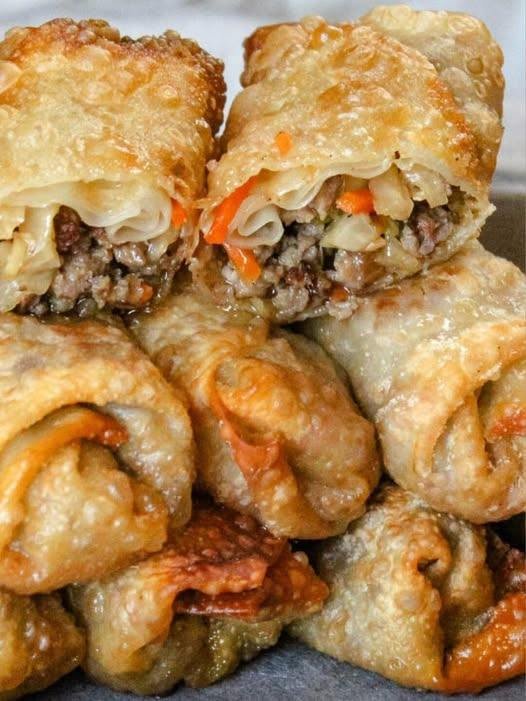
Baking Method (Healthier Alternative)
For a lighter version, baking is an excellent option. Preheat your oven to 425°F (220°C) and line a baking sheet with parchment paper. Arrange the egg rolls seam-side down, ensuring they don’t touch.
Brush each egg roll generously with vegetable oil or spray with cooking spray. This helps achieve a golden, crispy exterior. Bake for 15 minutes, then carefully flip each egg roll and brush or spray the other side with oil. Continue baking for another 10 to 15 minutes until golden brown and crispy.
Baked egg rolls won’t be quite as crispy as fried versions, but they’re significantly lower in fat while still delivering satisfying crunch and flavor.
Air Frying Method
The air fryer offers a middle ground between deep frying and baking. Preheat your air fryer to 390°F (200°C). Lightly spray the egg rolls with cooking oil and arrange them in a single layer in the basket, ensuring they don’t touch.
Cook for 10 to 12 minutes, flipping halfway through, until golden and crispy. You may need to work in batches depending on your air fryer’s size. The results are remarkably close to deep-fried texture with minimal oil.
Serving Suggestions
Egg rolls are incredibly versatile and pair well with various accompaniments. The classic choice is sweet and sour sauce, which provides a tangy contrast to the savory filling. Chinese hot mustard offers a spicy kick that many people love, while duck sauce delivers sweet, fruity notes.
For a more sophisticated presentation, serve with soy-ginger dipping sauce made by combining soy sauce, rice vinegar, fresh ginger, and a touch of honey. A simple sweet chili sauce also works wonderfully, providing both heat and sweetness.
Garnish your serving platter with fresh cilantro, sliced green onions, or sesame seeds for visual appeal. Serve egg rolls as an appetizer alongside other Chinese favorites like fried rice, lo mein, or potstickers for a complete meal.
Storage and Reheating Tips
Leftover egg rolls can be stored in an airtight container in the refrigerator for up to 3 days. To maintain crispiness, avoid stacking them directly on top of each other. Instead, place parchment paper between layers.
For reheating, avoid the microwave, which will make them soggy. The oven method works best: preheat to 350°F (175°C), place egg rolls on a wire rack over a baking sheet, and heat for 10 to 15 minutes until crispy and heated through. Air fryers also excel at reheating, requiring just 5 to 7 minutes at 350°F.
Freezing for Future Enjoyment
Egg rolls freeze exceptionally well, making them perfect for meal prep. You can freeze them either before or after cooking.
To freeze uncooked egg rolls, arrange them in a single layer on a baking sheet and freeze until solid (about 2 hours). Transfer to freezer bags, removing as much air as possible. They’ll keep for up to 3 months. When ready to cook, fry or bake directly from frozen, adding a few extra minutes to the cooking time.
For pre-cooked egg rolls, allow them to cool completely before freezing using the same method. Reheat from frozen in the oven or air fryer until crispy and heated through.
Common Mistakes to Avoid
Several pitfalls can affect your egg roll success. Overfilling is the most common error, leading to burst wrappers and messy results. Stick to 2 to 3 tablespoons of filling per wrapper.
Using warm filling causes soggy wrappers that are difficult to seal and more likely to break during cooking. Always cool your filling completely before wrapping.
Incorrect oil temperature is another frequent issue. Too cool, and your egg rolls absorb excess oil; too hot, and they burn outside while remaining cold inside. Invest in a thermometer for best results.
Inadequate sealing leads to egg rolls that open during cooking, spilling their contents. Ensure all edges are moistened and pressed firmly, with no gaps or air pockets.
Customization Ideas
Once you’ve mastered the basic recipe, endless variations await. For a vegetarian version, replace the pork with crumbled firm tofu, mushrooms, or additional vegetables like bell peppers and water chestnuts.
Shrimp egg rolls are a popular variation. Use chopped cooked shrimp in place of pork, adding a touch of fish sauce for depth. Buffalo chicken egg rolls have gained popularity in recent years, combining shredded chicken with buffalo sauce and cream cheese.
For fusion flavors, try southwest egg rolls with black beans, corn, peppers, and cheese, or breakfast egg rolls filled with scrambled eggs, sausage, and cheese.
Pro Tips for Restaurant-Quality Results
Professional-looking egg rolls require attention to detail. Cut all vegetables to uniform size for even cooking and consistent texture. A food processor with a shredding attachment makes quick work of cabbage and carrots.
Don’t rush the cooling process. Completely cooled filling is essential for easy wrapping and prevents soggy wrappers. Keep egg roll wrappers covered with a damp towel while working to prevent them from drying out and cracking.
Maintain consistent oil temperature throughout frying by working in small batches and allowing the oil to recover between batches. A spider strainer or slotted spoon makes removing egg rolls easy and safe.
For extra-crispy results, double-fry your egg rolls. Fry once until lightly golden, drain and cool slightly, then fry again briefly at a slightly higher temperature until deep golden brown.
Nutritional Considerations
Traditional fried egg rolls are indulgent treats, with each roll containing approximately 150 to 200 calories, primarily from the frying oil and wrapper. The filling itself is relatively healthy, providing protein from the meat and fiber from the vegetables.
For lighter versions, baking or air frying significantly reduces calories and fat. Using lean ground chicken or turkey instead of pork further decreases fat content. Whole wheat egg roll wrappers, when available, add fiber and nutrients.
Consider serving egg rolls alongside fresh vegetables or a light salad to balance the meal. The key is portion control and choosing your cooking method based on your dietary goals.
Conclusion
Making homemade Chinese egg rolls is a rewarding culinary adventure that results in food far superior to most takeout options. With fresh ingredients, proper technique, and a little practice, you’ll be creating crispy, flavorful egg rolls that rival your favorite Chinese restaurant.
The beauty of this recipe lies in its flexibility. Once you’ve mastered the basics, you can experiment with different fillings, cooking methods, and flavor combinations to create your perfect egg roll. Whether you’re preparing them for a party, meal prepping for the week, or simply craving a delicious snack, homemade egg rolls are sure to impress.
So gather your ingredients, heat up that oil, and get rolling. Your kitchen is about to smell amazing, and your taste buds are in for a treat. Happy cooking!