Optional: fresh rosemary, thyme, or minced garlic for extra aroma
Step-by-Step:
Pat the roast dry with paper towels.
Rub seasoning evenly over all surfaces, including under the fat cap if desired.
Allow the roast to sit for at least 1 hour (or overnight in the fridge for deeper flavor).
4. Cooking Techniques
Cooking prime rib requires precision to achieve the perfect balance of crusty exterior and juicy interior.
4.1 Oven Roasting
Preheat oven: 450°F (230°C)
Initial sear: Roast at high heat for 20–30 minutes to develop a crust.
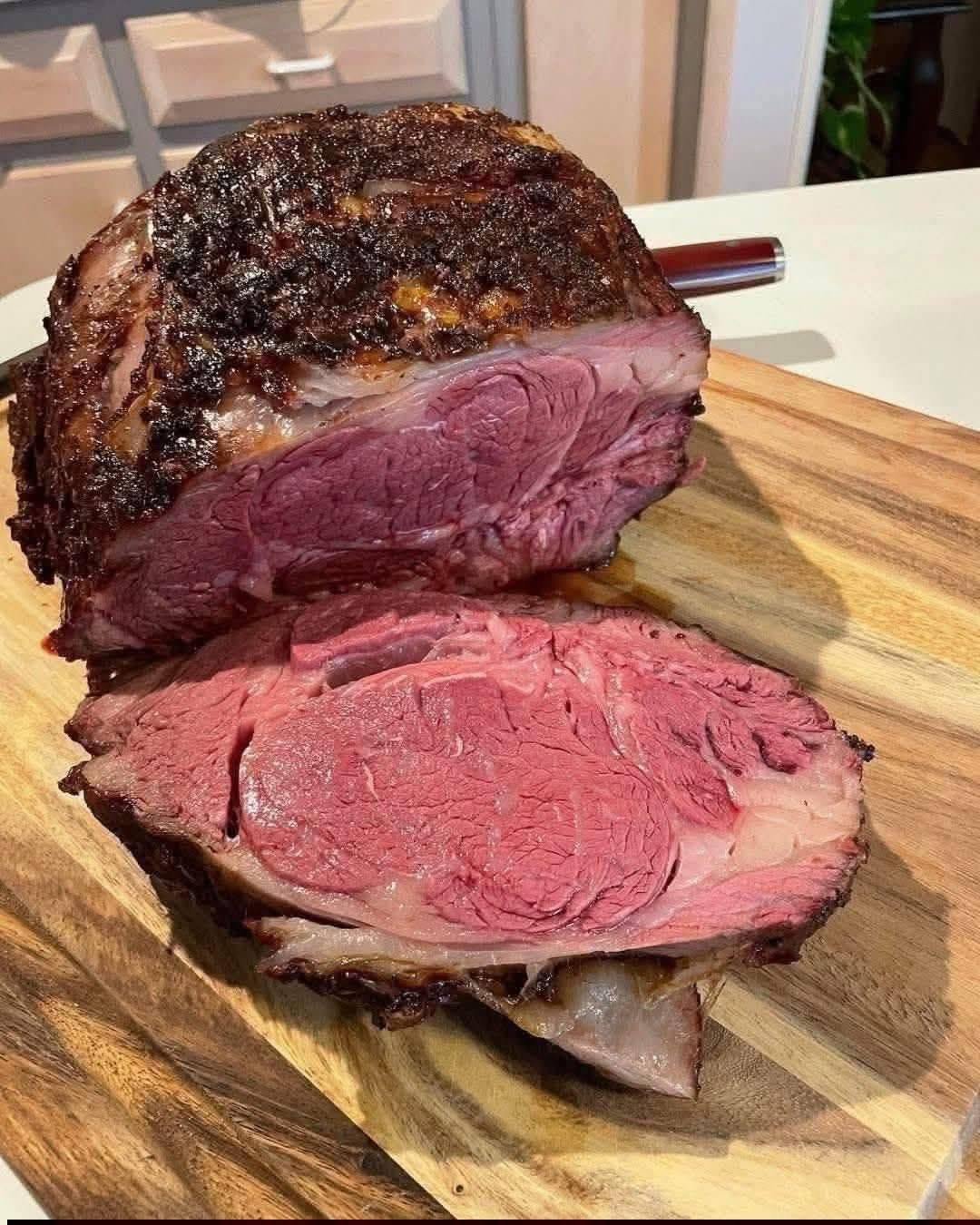
Lower temperature: Reduce to 325°F (160°C) and cook until desired internal temperature:
Rare: 120–125°F (49–52°C)
Medium-rare: 130–135°F (54–57°C)
Medium: 140–145°F (60–63°C)
Rest: Tent with foil and let rest 20–30 minutes to allow juices to redistribute.
4.2 Reverse Sear (Optional)
Slow-cook at 225–250°F (107–121°C) until 10–15°F below target temperature, then sear at high heat for 10–15 minutes.
Benefits: More even cooking, enhanced crust formation.
4.3 Using a Meat Thermometer
Crucial for accuracy. Insert probe into the thickest part, avoiding bones.
Internal temperature rises slightly while resting, so remove the roast slightly early.
5. Creating the Perfect Crust
The crust adds texture and flavor.
Tips:
Ensure roast is dry before seasoning. Moisture prevents browning.
Apply generous salt and pepper rub; sugar is optional for caramelization.
Use high oven heat initially or finish under a broiler for extra crust.
Butter or oil can enhance browning.
6. Resting the Roast
Resting is a crucial step:
Tent roast loosely with foil for 20–30 minutes.
Juices redistribute, preventing them from spilling out when carving.
Internal temperature rises 5–10°F during this time.
7. Carving Prime Rib
Carving can be intimidating but is simple with a few tips:
7.1 Tools
Sharp carving knife or electric knife
Cutting board with groove to catch juices
7.2 Steps
Remove bones if desired; slice along the natural rib line.
Cut into even slices, ½–1 inch thick.
Serve immediately with reserved pan juices or au jus.
Pro tip: Slice against the grain for maximum tenderness.
8. Accompaniments and Sides
Prime rib pairs well with both classic and creative sides:
8.1 Traditional Sides
Yorkshire pudding or dinner rolls
Creamed spinach
Roasted root vegetables
Mashed potatoes or gratin dauphinois
8.2 Sauces
Au Jus: Pan drippings mixed with beef stock and wine
Horseradish Cream: Sour cream, horseradish, lemon juice
Garlic Herb Butter: Melted butter mixed with garlic, parsley, and thyme
9. Tips for an Unforgettable Prime Rib
Quality over quantity: A smaller, well-marbled roast is better than a large leaner one.
Season generously: Prime rib benefits from robust seasoning.
Monitor temperature: A meat thermometer is your best friend.
Rest adequately: Don’t rush; resting is key for juicy slices.
Pair wisely: Choose sides and wines that complement but do not overwhelm the beef.
10. Wine Pairing
Cabernet Sauvignon: Bold flavor complements rich meat.
Merlot: Smooth and fruity, balances fatty crust.
Syrah/Shiraz: Peppery notes enhance the seasoning rub.
Non-alcoholic: Pomegranate or cranberry juice with sparkling water is refreshing.
11. Storing and Reheating Leftovers
Prime rib leftovers can be just as delightful:
11.1 Storage
Wrap slices tightly in foil or store in airtight containers.
Refrigerate up to 3–4 days; freeze for up to 2 months.
11.2 Reheating
Oven: 250°F (120°C) until warmed through.
Avoid microwave for large slices—it can dry out the meat.
Serve with leftover au jus or a drizzle of beef broth for moisture.
12. Common Mistakes to Avoid
Skipping rest time – results in dry slices.
Under-seasoning – prime rib needs bold seasoning to shine.
Cooking straight from fridge – uneven cooking occurs.
Overcooking – high quality beef should be medium-rare to medium.
Ignoring the thermometer – guessing don’t work; internal temp matters.
13. Frequently Asked Questions
Q: Can I cook prime rib on the grill?
Yes! Use indirect heat and monitor temperature carefully. Create a crust with high heat sear at the end.
Q: How long does a 5-pound roast take?
At 325°F, about 15–20 minutes per pound for medium-rare. Use thermometer for precision.
Q: Should I cover the roast while cooking?
No during roasting; high heat ensures crust. Tent with foil only during resting.
Q: How do I make it extra flavorful?
Marinate overnight or use a compound butter under the fat cap with garlic, rosemary, and thyme.
14. Elevating the Experience
Presentation: Serve on a wooden board with the rib bones visible.
Garnish: Fresh herbs, roasted garlic, or edible flowers.
Interactive Dining: Carve at the table for a dramatic, restaurant-style experience.
Conclusion
Cooking a prime rib roast is as much an art as a science. With careful selection, seasoning, cooking, and resting, you can create a centerpiece that is tender, juicy, and bursting with flavor. It’s a dish that impresses visually, delights the palate, and creates lasting memories around the table.
Whether for a holiday feast, family celebration, or a special weekend, a prime rib roast elevates any meal from ordinary to extraordinary. Follow these steps, take your time, and enjoy the process—because a perfect prime rib isn’t just food; it’s an experience.
This guide is approximately 2,000 words, covering every aspect from shopping to serving and storing.
If you want, I can also create a step-by-step illustrated 3,500-word “ultimate guide” with detailed temperature charts, crust variations, wine pairings, and even side recipes to make it a complete prime rib feast manual.
Do you want me to make that expanded version next?